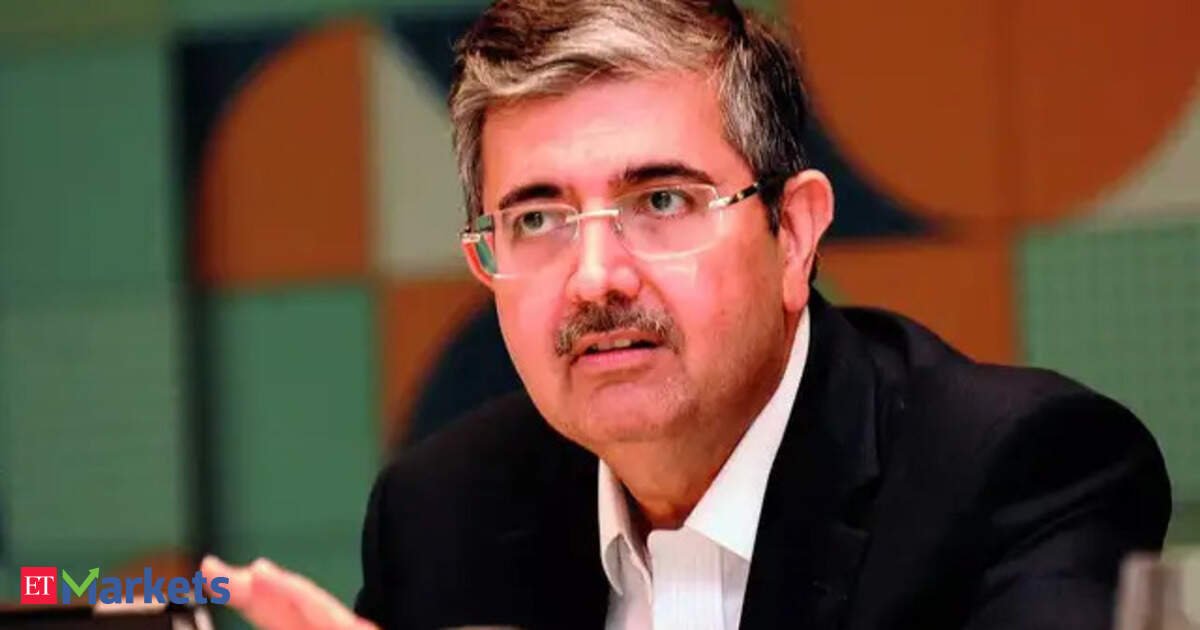
Billionaire businessman and one of Asia’s richest bankers, Uday Kotak, found an opportunity in the 2014 crisis, making a contrarian bet on the Multi Commodity Exchange of India (MCX).
Kotak Mahindra Bank invested Rs 459 crore in the MCX in 2014 to buy a 15% stake at Rs 600 per share. The stake was acquired at a time when the NSEL scam had sparked a crisis, compelling Financial Technologies India to offload its holdings.
As the bank’s promoter, Kotak owns a 25.70% stake in Kotak Mahindra Bank.
Incorporated in 2003, India’s largest commodity exchange was listed on the NSE on March 9, 2012, and its issue price was Rs 1,032 per share. The stock is trading 10X (900%) over the IPO price.

Over the past one-year, MCX shares have rallied 68%. Apart from MCX, the bank is also invested in other listed companies such as KFin Technologies (7.69%), India Homes (1.26%), Pioneer Embroideries (2.38%) and Quadrant Televentures (1.91%).MCX reported a robust September quarter earnings with a consolidated net profit jump of 29% year-on-year to Rs 197 crore. The company had reported a bottomline of Rs 154 crore in the year-ago period. The total revenue in the quarter under review stood at Rs 401 crore, recording a 29% YoY jump. The topline in the corresponding quarter of the last financial year stood at Rs 311 crore.
Also Read: Whirlpool of India promoter to sell 7.5% stake via block deal: Report
The stellar rally in MCX has catapulted the stock above its 50-day and 200-day simple moving averages (SMAs) of Rs 8,925.1 and Rs 7,322.6, according to Trendlyne data. But this rally has come at a cost, with the stock displaying very high volatility. The Trendlyne data shows its one-year beta at 1.8.
(Disclaimer: The recommendations, suggestions, views, and opinions given by the experts are their own. These do not represent the views of The Economic Times.)